


A life etched in verse
Susie Williams
08 February 2026, 2:00 AM
Content proudly provided by Coast Lines magazine
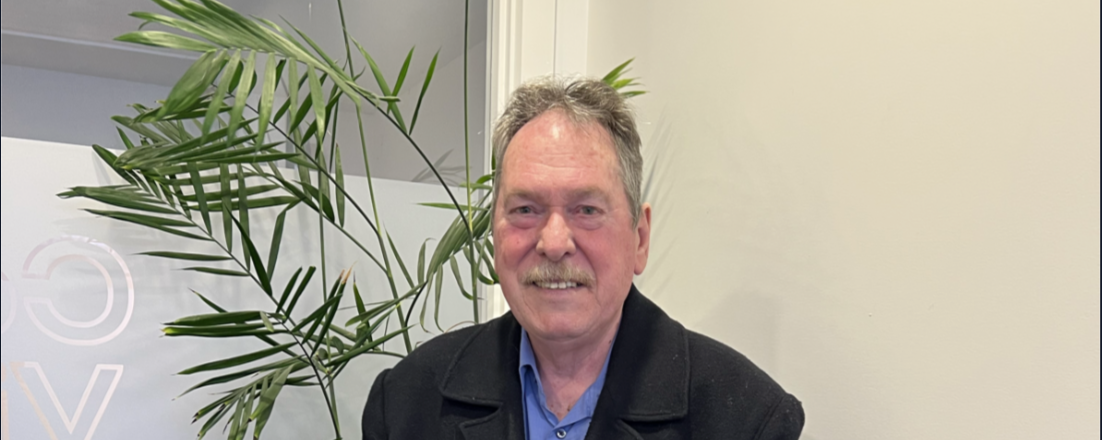
By any measure, Christopher Battams is a remarkable poet. For Coast Lines readers, his is a familiar voice whose poems pulse with the rhythms of the land, the weight of memory and the ache of justice.
But beyond the lines is a man whose journey from flood-swept Riverland beginnings to international acclaim has been far from ordinary.
Born in Barmera in 1956, Chris’s early life was shaped by water—too much of it. The Riverland region suffered a catastrophic flood the year he was born, and that deluge marked not just the town, but the mind of a child who developed a life-long distaste for deep water. Growing up in rough country housing without electricity or plumbing, Chris moved often, attending many schools. What remained constant was his love of English and his growing connection to storytelling.
As a boy, he was drawn to the ballads of Banjo Paterson and Henry Lawson—poetry that sang of dusty stock routes and the rawness of the Australian bush. He also fell for the gentle cadences of country music, its “soft lullaby” staying with him into adulthood. Later, he would chase these stories firsthand, working on vast sheep and cattle stations. But it wasn’t until tragedy called him back home that his poetic voice began to develop.
Returning to support his mother and younger siblings, Chris settled back in the Adelaide and joined the Glenelg Council. In the early 70s, a motorbike accident left him with severe head injuries and loss of speech. Recovery was slow and brutal. But during this time, a friend gave him a book of poetry by Roland Robinson—an act that would redirect his life.

Robinson, a member of the Jindyworobak movement, wrote of Indigenous life, birds and the Australian landscape. Chris connected deeply with these themes and began to write again, finding in poetry a therapeutic path to reclaim his language and identity. His first political poem, Talking Tree, emerged from this period—a response to a Bulletin magazine article about the destruction of an Aboriginal sacred site. Written from the perspective of a tree mourning its loss, the poem struck a chord. It has since been published in ten anthologies across five countries.
Today, Chris lives just outside Back Valley, on a patch of rural land surrounded by birdsong, kangaroos and gum trees. “It’s good for my psyche,” he says. “It’s where I come from. It’s my heritage.” From this tranquil base, he writes longhand in his study, inspired by the land, Aboriginal culture, mythology and the solitude of country life.
But Chris is not a recluse. He’s an active member of the vibrant Fleurieu artistic community. “There’s a strong sense of connection here,” he says. “We share work, give feedback and lift each other up.” For those looking to share their creative work, his advice is simple: “Join a group. You need feedback. It gives you confidence. It makes you better.”
After four decades of writing, Chris’s resume is staggering. He’s been published over 40 times, aired on radio and television, featured in Australian and international journals, and even invited to lecture at the Sorbonne in Paris on the intersection of Indigenous culture and poetry.
Still, he remains grounded. “It took me 45 years to become an overnight success,” he says, with a grin.
Chris has also taught science and Aboriginal education professionally and believes deeply in the power of knowledge. “I like the idea of learning and passing it on,” he says. Whether it’s explaining the concept of air pressure to school kids with a plastic bag or breaking down the complexities of archaeological evolution in his poetry, Chris sees education and writing as intertwined tools for understanding the world.
His poetry collections—A Book of Poetry—are stocked in local libraries, and his work appears frequently in Coast Lines. He continues to write every day, often drawing from deep within: memories of working in London, homesickness turned into epic verse, the resilience it took to find his voice again after injury.
Even now, with a friend in Sydney helping refine a new compilation of his life’s work, Chris is chasing perfection. “It has to be right,” he says. “If it’s not, I’ll pull it.”
When asked what readers should know about him, Chris doesn’t talk about fame or awards. He talks about kindness. “Don’t be cruel to animals. Don’t litter. Look after the environment,” he says. “We live in the best part of the world. We need to care for it.”
With every line he pens, Chris Battams reminds us that poetry is not just a craft—it’s a calling, a mirror and a map. And through his words, our community has come to see itself more clearly.