


Rec fishing restrictions eased and buoys ahoy

Staff Reporters
23 December 2025, 7:42 PM
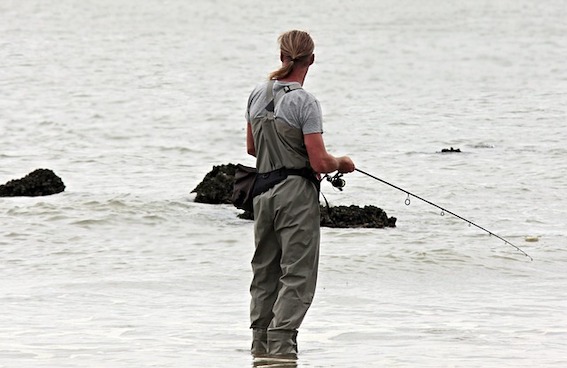
Temporary fishing restrictions for recreational and charter boat fishers have been eased following the latest review of fish stocks.
Recreational and charter boat fishers can once again catch full bag, boat and passenger catch limits for Blue Swimmer Crab and Southern Garfish in Spencer Gulf.
Restrictions have also been lifted for migratory finfish species in the Gulf St Vincent and Kangaroo Island Fishing Zone.
The migratory finfish species include Australian Herring, Barracouta, Mulloway, Southern Bluefin Tuna, Western Australian Salmon and Yellowtail Kingfish.
The easing of restrictions follows the latest scientific review of fish stocks which includes updated scientific assessment that indicate Blue Swimmer Crab and Southern Garfish stocks are performing sustainably in Spencer Gulf.
The precautionary restrictions came into effect on 1 November aimed at assisting the recovery of fish stocks from algal bloom impacts.
All other temporary recreational bag, boat and charter boat passenger fishing limits remain in place. For further details on all fishing limits visit the PIRSA website.
The state government will continue to regularly review the temporary restrictions in line with scientific evidence.
Recreational fishers are also strongly encouraged to assist the scientific effort by reporting their catches via the SA Fishing app.
Premier Peter Malinauskas says there have been promising results with low to no harmful Karenia algae around the majority of the coastline for some weeks.
Meanwhile six hi-tech monitoring buoys which will automatically detect future harmful algal blooms before they reach the shore are being deployed across South Australian waters.
The state-of-the-art oceanographic moorings are equipped with specific sensors for early detection of key harmful algal bloom (HAB) species such as Karenia. If a HAB species is detected, an immediate alert is sent to scientists via satellite communication.
They also provide real-time, continuous monitoring of critical parameters including temperature, salinity, chlorophyll, dissolved oxygen and turbidity.
Part of the state and federal governments’ $102 million Summer Plan, the sophisticated monitoring system strengthens South Australia’s ability to detect, track, research and forecast coastal water quality and harmful algal blooms.
The moorings will form a core component of the South Australian Integrated Coastal Water Quality Monitoring and Forecasting System, a comprehensive scientific program led by the new Office for Algal Bloom Research in conjunction with CSIRO.
The monitoring system builds on the existing Integrated Marine Observing System moorings which have been in place in open waters off the coast since 2008, with the new moorings enabling coverage in inner coastal areas.
Minister for Primary Industries and Regional Development Clare Scriven says while the algal bloom has presented many unprecedented challenges, it has also provided opportunities to learn from this event to ensure optimal preparedness for the future.
“By integrating world‑leading technologies from SARDI, CSIRO, and other research partners, we are building one of the most advanced coastal monitoring systems in the country.
“This is about using the best science available to protect our marine ecosystems for the future.
SARDI Executive Director Professor Mike Steer says the monitoring buoys are an invaluable asset for South Australia.
“What’s really exciting about this, is it means real-time updates and the information collected by these devices will be sent straight to the scientists so rapid response measures can be activated.
“In the event of another harmful algal bloom, these impressive devices will help provide an earlier heads up for aquaculture industries and the community.”
The first two monitoring buoys have been installed at St Kilda and Stansbury in Gulf St Vincent, with the remaining four sites to be finalised in consultation with industry.