


Working together on roadside weed management in the Fleurieu

FA Contributor
20 January 2026, 11:22 PM
Sponsored Content
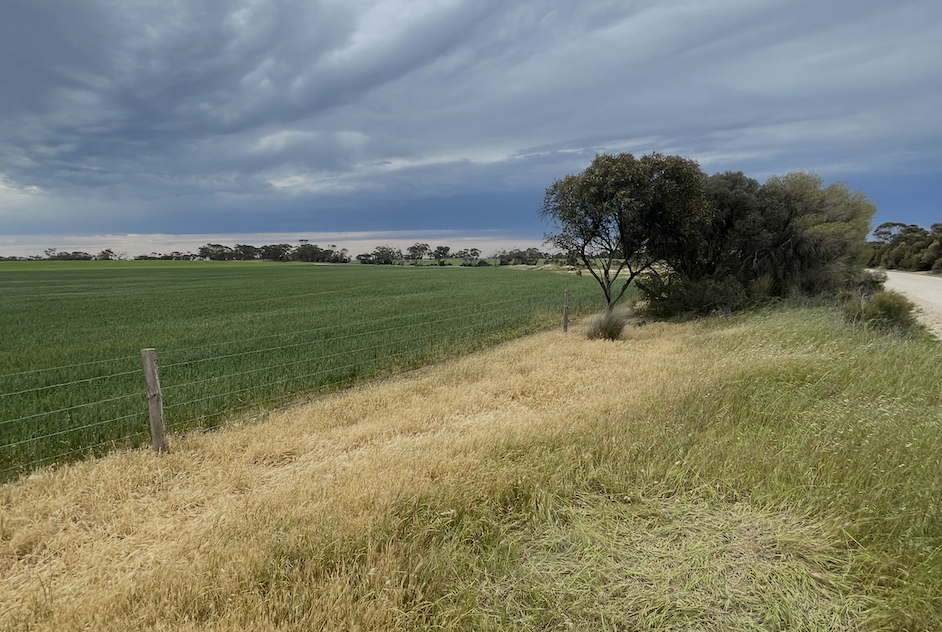
January is a time when many Fleurieu landholders are looking across paddocks, fence lines and roadsides and thinking ahead. Summer weeds are visible, decisions are being made about timing and control, and for many, frustration can creep in when roadside management does not appear to align with what is happening inside the fence.
Roadside weed management is often most noticeable at certain times of year, but it is an issue that exists all year round. Weed species change with the seasons, with both summer and winter growing varieties presenting different challenges. This makes timing, planning and coordination critical, rather than relying on reactive or one off responses.
Roadside weed management is one of those topics that can feel straightforward on the surface, yet becomes complex very quickly. Councils, landholders, Landscape Boards, contractors and neighbours all have different responsibilities, priorities and constraints. Add seasonal pressures, environmental considerations and limited resources, and it becomes clear there is no single or simple answer.
Across the Fleurieu, and more broadly across southern Australia, roadside weeds are increasingly recognised as more than a local or visual issue. How they are managed has implications for herbicide resistance risk, biosecurity outcomes and long term productivity. Poor alignment between roadside and on farm management can undermine good practice, even where individual efforts are well intentioned.
Weeds don’t recognise boundaries. Seed moves easily from roadsides into paddocks and back again. When roadside management is inconsistent, delayed or poorly timed, the impact is felt beyond the road reserve. This is not about assigning fault. It is about recognising that roadside weed management operates as a shared system rather than a series of isolated decisions.
Effective weed management is not just about which product is used. Timing, method, growth stage, access, safety and follow up all matter. Best practice also considers environmental values, community expectations and practical constraints. When any one of these factors is overlooked, outcomes suffer.
In late 2025, a GRDC funded roadside weeds project commenced, led by me, Paige Cross of Cross Country Management, focusing on understanding roadside weed management from both sides of the fence. Rather than concentrating on individual weed species, the project is centred on what good, practical and achievable roadside weed management looks like in real landscapes such as the Fleurieu.
The project recognises that councils, landholders and Landscape Boards operate under very different pressures. Councils must balance legislative obligations, biodiversity requirements, community expectations and finite budgets. Landholders are managing seasonal risk, labour constraints, rising costs and compliance requirements. Landscape Boards work across large and diverse regions with competing priorities.
Contractors operate within safety, access and timing constraints. None of these decisions are made in isolation.
Rather than seeking a one size fits all solution, the project is designed to build shared understanding and support practical collaboration. The focus is on defining best practice roadside weed management that is realistic, timely and appropriate for the Fleurieu landscape. That includes conversations about responsibility, resourcing, timing, communication and coordination across boundaries.
From my work with farming businesses, councils and grower groups, one consistent theme emerges. Most people want the same outcome, that is well managed roadsides, reduced weed spread, lower resistance risk and approaches that make sense on the ground. Where challenges often arise is in differing expectations and limited opportunities to talk through what best practice looks like when all constraints are considered.
The opportunity lies in bringing the right people together early, before frustration builds, and creating space for practical conversations. Conversations that acknowledge constraints, identify common ground and focus on what can realistically be done differently to improve outcomes for everyone.
Workshops planned for early March will form part of this broader conversation. They will provide a practical forum for landholders, council staff and Landscape Board representatives to discuss what best practice roadside weed management looks like in the Fleurieu, and how greater alignment and collaboration can be achieved in practice.
Register your interest
Expressions of interest are now open for an upcoming roadside weed management workshop to be held in early March.
Landholders, council representatives and Landscape Board staff are encouraged to visit www.crosscountrymanagement.com.au/grdc-project for more information and to register their interest.
Roadside weed management is a shared challenge. Working together is the first step toward defining what best practice looks like for the Fleurieu.
Paige Cross

Principal Consultant – Cross Country Management
Paige has more than two decades of experience working across agriculture, agribusiness finance, local government and project management. Her background spans agronomy, advisory roles and working closely with farming businesses, councils and industry organisations across South Australia, Victoria and New South Wales.
Growing up on a family farm in South Australia, Paige has a strong understanding of the practical realities landholders face across seasons. She remains actively involved in farming, which informs her approach and ensures her advice is grounded in real world experience.
Through Cross Country Management, Paige works with farming businesses to support sound decision making, business planning and long term sustainability. She also leads and delivers industry funded projects and facilitates workshops that bring together landholders, councils and industry to work through complex, shared challenges.
Paige is currently leading a GRDC funded project focused on collaborative approaches to roadside weed management, with an emphasis on defining best practice that works across different land tenures and responsibilities.
Paige is known for her ability to work across boundaries, helping stakeholders build shared understanding and practical pathways forward.
Qualifications include:
Bachelor of Applied Science (Agronomy)
Certificate IV in Training and Assessment
Accredited ChemCert Trainer
Contact:
Email: [email protected]
Ph: 0409 794 219
Linked In – Paige Cross
X – Psmallacombe
FB & Insta @ CrossCountryManagement